
Chinese Written and Linguistic Elements
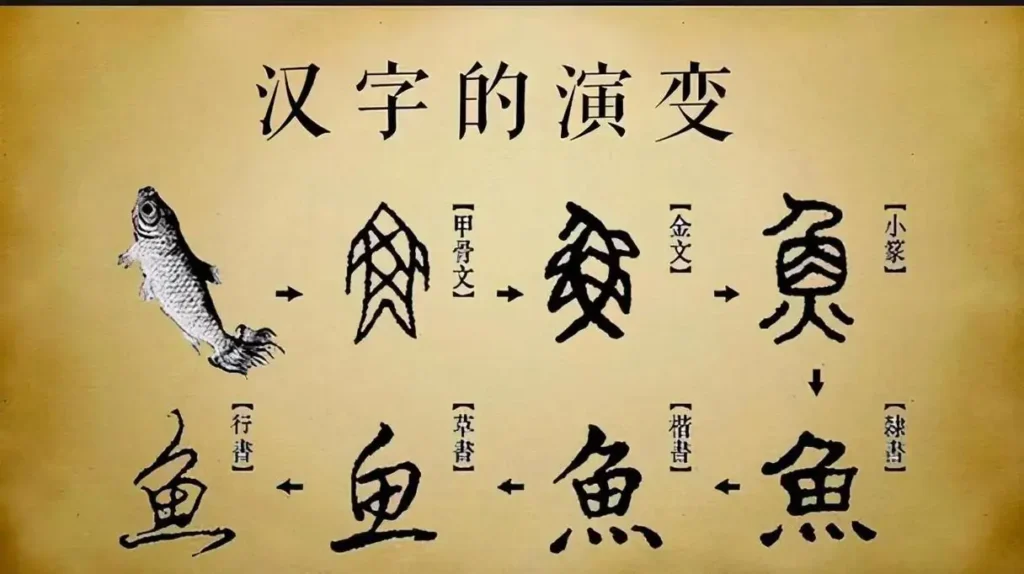
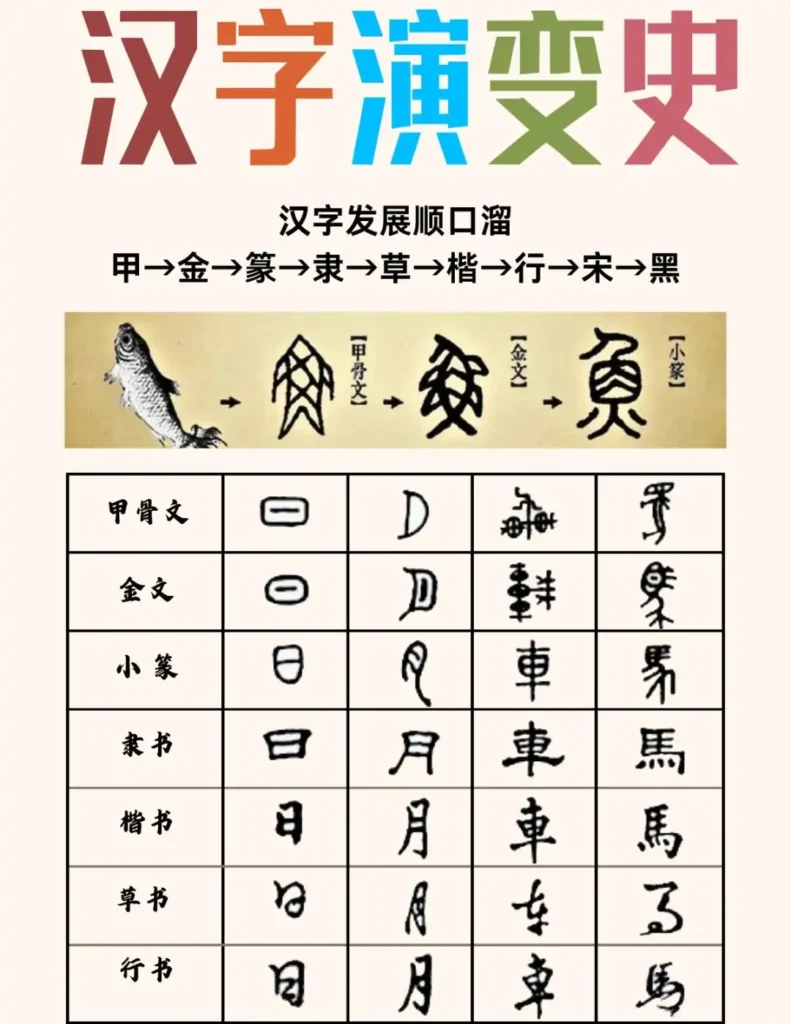
Chinese characters are used not only within China but also in other countries of the Chinese cultural sphere such as Japan, serving as the primary carrier for inheriting Chinese culture. Chinese characters took shape through the simplification of graphic symbols. Seventeen sets of carved symbols were uncovered on fourteen artifacts excavated from the Jiahu Site in Henan Province, representing the earliest carved symbols discovered in China to date. Dating back roughly 5,000 years before oracle bone inscriptions, they bear similarities to oracle bone inscriptions and largely match Chinese characters in fundamental structures, combination rules and writing features. The Dawenkou pottery symbols unearthed in Tai’an City, Shandong Province, date back about 6,000 years, over 2,000 years earlier than the oracle bone inscriptions from the Yin Ruins. There remains debate over whether the carved symbols of the Xia Dynasty found at the Erlitou Culture Site qualify as writing, yet many scholars hold the belief that Xia Dynasty writing was more sophisticated than that of the Shang Dynasty. The oracle bone inscriptions etched onto animal bones and tortoise shells unearthed at the Yin Ruins of the Shang Dynasty are the earliest mature Chinese characters ever discovered. Meanwhile, bronze inscriptions cast on ritual bronze vessels carry immense historical value. Writing systems across pre-Qin states lacked uniformity; during the Spring and Autumn and Warring States periods, various states developed and diverged Chinese characters to varying degrees, until the Qin Dynasty replaced large seal script with small seal script. As small seal script evolved, numerous new pictophonetic and associative compound characters emerged, enabling more precise and accurate written records. Small seal script featured predominantly curved strokes, which gradually shifted toward straight lines for greater writing ease. In the Han Dynasty, clerical script supplanted small seal script as the dominant writing style. The emergence of clerical script marked a major advancement for Chinese characters, laying the foundation for the structural forms of modern Chinese characters and forming the dividing line between ancient and modern writing styles. Common handwriting styles include clerical script, regular script, Song typeface, semi-cursive script and more. Following the Chinese character simplification campaigns and reforms carried out in mainland China in modern times, two primary writing systems are used across Chinese communities today: traditional Chinese characters and simplified Chinese characters.
The Chinese language encompasses Standard Mandarin and a range of dialect groups: Mandarin, Pinghua, Xiang Chinese, Wu Chinese, Cantonese, Gan Chinese, Hakka, and Min Chinese (including Southern Min, Northern Min, Central Min and other varieties).
Writing systems historically modeled after Chinese characters:
Major examples include Khitan script, Tangut script, Jurchen script, Sawcuengh (Square Zhuang Script), ancient Bai script, ancient Miao script, ancient Qiang script, Shui script, Chữ Nôm, kanji (also known as Japanese Chinese characters), and archaic Korean Hanja.