
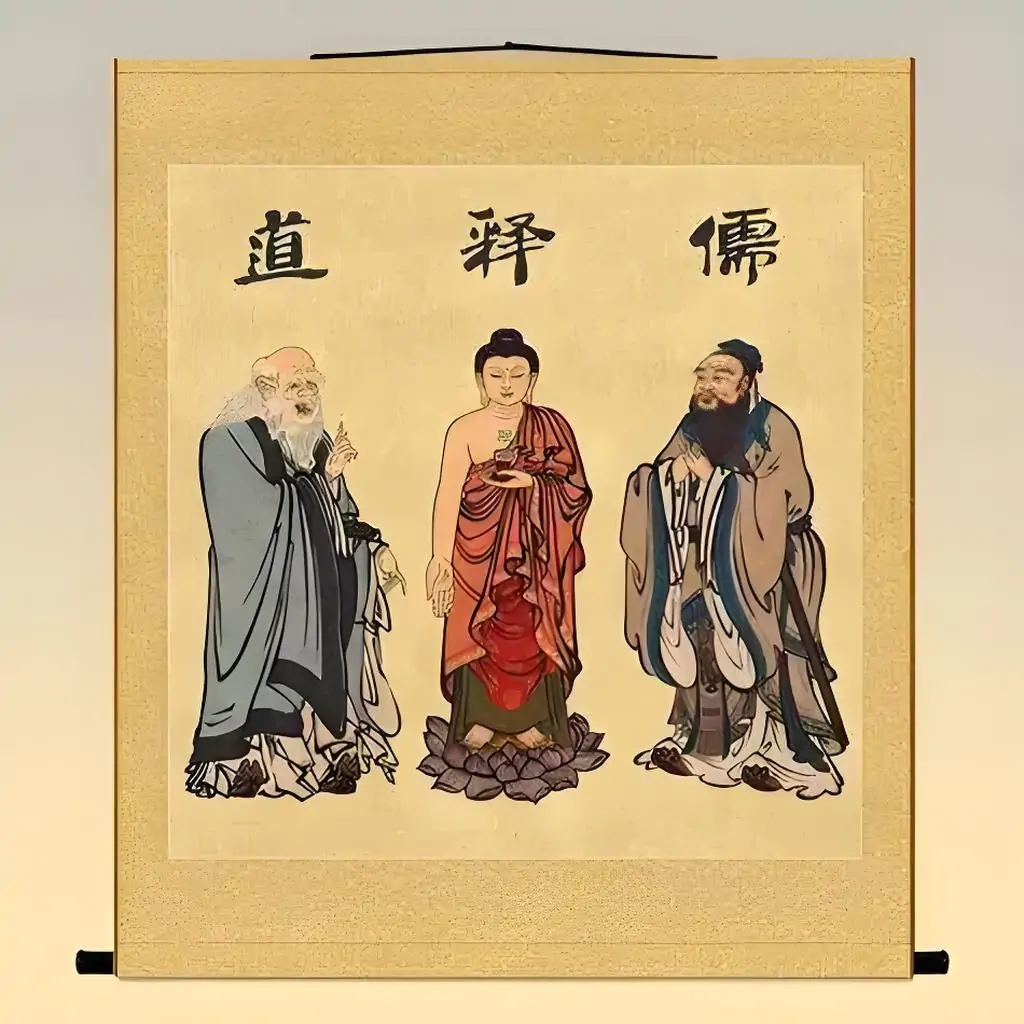
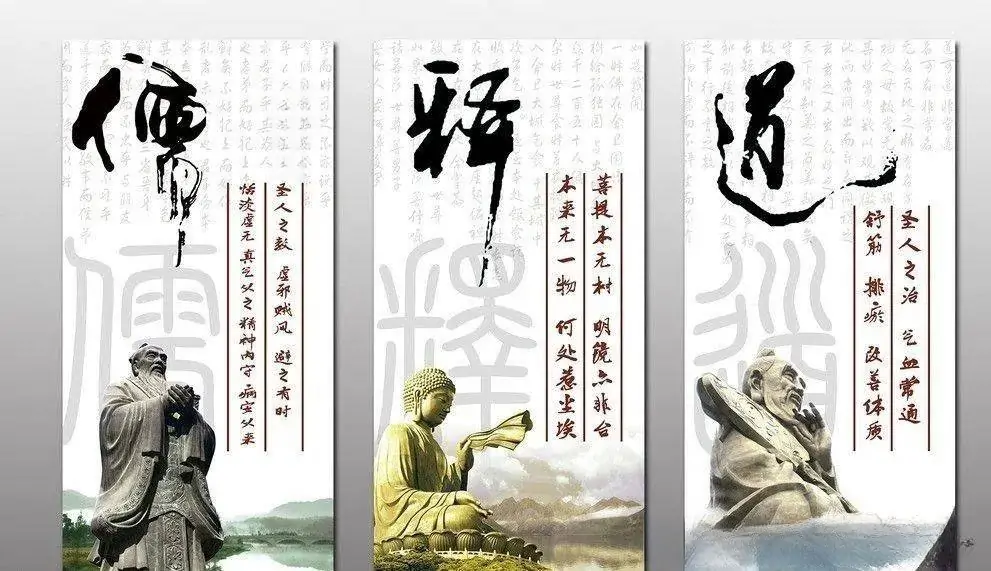
Confucianism, Buddhism and Taoism constitute the core of traditional Chinese culture.
Confucian religion differs from Confucian school of thought. It has been perpetuated through rituals in ancestral temples and clan shrines, as well as offerings at Confucian and Martial Temples, and attained the status of orthodox ideology through imperial edification. Besides, there exist various indigenous Chinese and regional folk beliefs, such as the cult of Guan Gong, the Mazu faith, the belief in the Three Mountain Kings, and the worship of loyal martyrs represented by Yue Fei. Ceremonies honoring the Yellow Emperor, the ancestral ancestor of the Chinese nation, and sacrifices to Confucius are typical faith-based activities.
Buddhism was first introduced to China roughly during the Western Han Dynasty and has become an integral component of traditional Chinese culture. In the history of Chinese Buddhism, eight major sects took shape: the Tiantai School, the Sanlun School, the Chan School, the Huayan School, the Pure Land School, the Yogacara School, the Vinaya School and the Esoteric School. After its arrival in China in the Han Dynasty, Buddhism integrated into Han culture through constant exchanges with it, evolving into Chinese Han Buddhism. Meanwhile, Tibetan Buddhism took root in the Tibetan regions.
Taoism originated as an indigenous Chinese religious form derived from ancient shamanism, drawing references from Buddhism and Neo-Taoist metaphysics. It holds the pursuit of immortality as its supreme belief. Core religious concepts including transmigration of souls and karmic retribution became integral parts of Taoism by the Northern and Southern Dynasties. The theories of Taoist nature, the Three Treasures and the Dharmakaya emerged under Buddhist influence and were fully established by the late Northern and Southern Dynasties. Overall, Taoism had largely completed the process of absorbing Buddhist doctrines and independently developing and expanding its own tenets by the early Tang Dynasty.